Seven hundred years ago, a Florentine exile wrote a poem about walking out of Hell. He meant it as a real journey, and he meant it about you. Dante’s Divine Comedy is the most detailed map of the afterlife ever built in words, and under the map is a simple human promise. There is a way through the dark, and if you are lucky, someone who has walked it before will take your hand and lead you to the edge of the light.
We rebuilt that journey as a first-person short video. You fall, the poet himself catches your hand, and the two of you go down through the whole of Hell and back up into the morning. You can watch it on YouTube, on our Instagram, or right here.
What is Dante’s Divine Comedy about?
Dante Alighieri wrote the Divine Comedy in the years around 1308 to 1320, in exile from a Florence that had sentenced him to death. It follows one traveler through the three realms of the Christian afterlife, Inferno, Purgatorio, and Paradiso, in a hundred cantos of rhymed Italian. For most of the descent his guide is the ancient Roman poet Virgil, who has been sent to lead him out. It is a poem about sin and grace, but it is also a plain adventure story about being lost in the middle of your life and finding your way back, and that is the part that has never aged.
What are the nine circles of Hell?
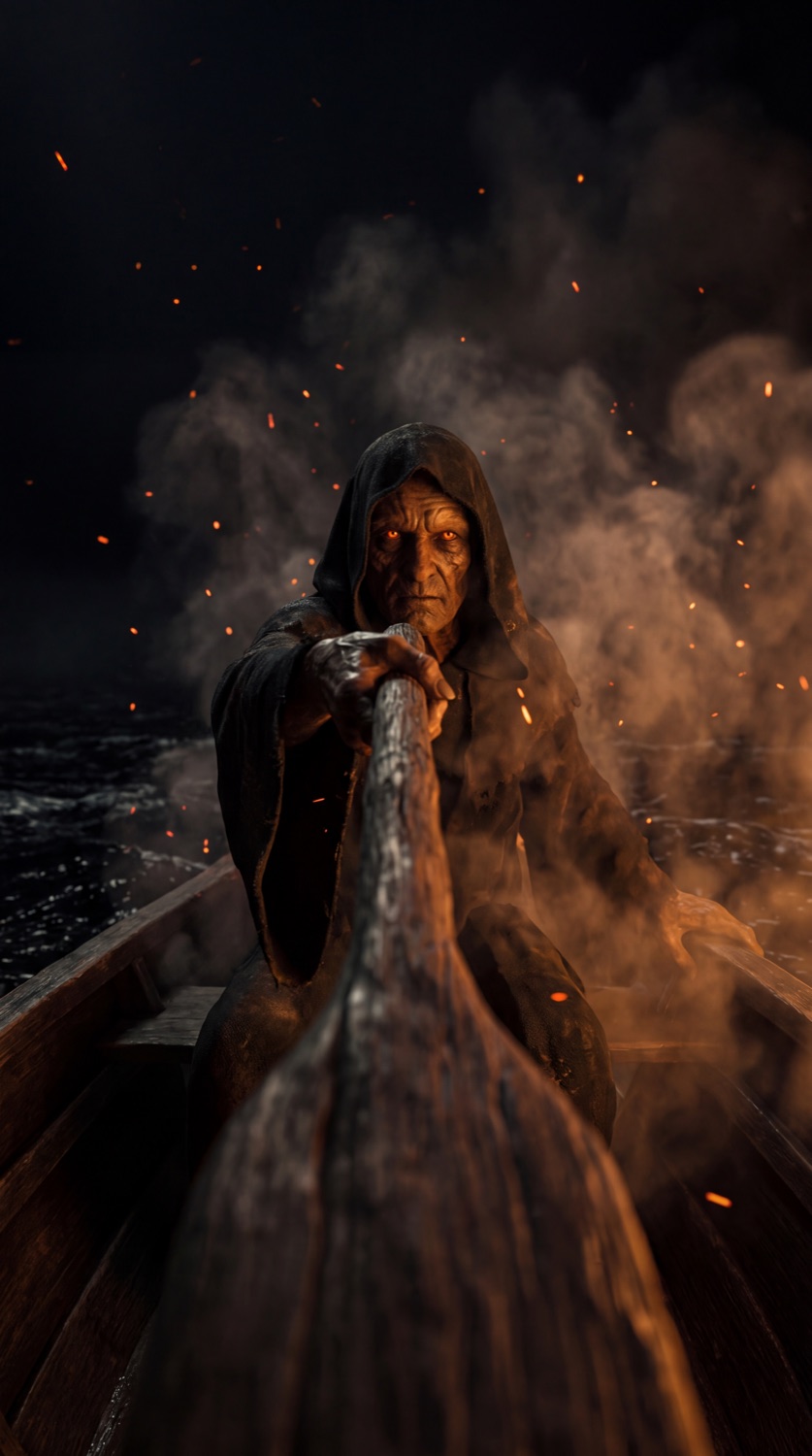
It opens with a man lost in a dark wood, cornered by three beasts. Then a guide appears, and they pass through a gate with a line carved over it that everyone still knows. Below the gate, Hell narrows downward in nine circles, each punishing a heavier sin. Charon, the ferryman of the dead, rows them across the river Acheron. In the second circle the lovers Paolo and Francesca are blown forever on a black wind, still holding on to each other, the most tender and most famous few lines in the whole poem. Deeper down there is a forest of the suicides, a plain of burning sand, and the red-hot iron walls of the city of Dis. At the very bottom there is no fire at all. There is a frozen lake, and Satan himself fixed waist-deep in the ice, and the only way out is to climb down his enormous body and come up on the other side of the world.
“Through me the way is to the city of woe. Abandon all hope, you who enter here.”
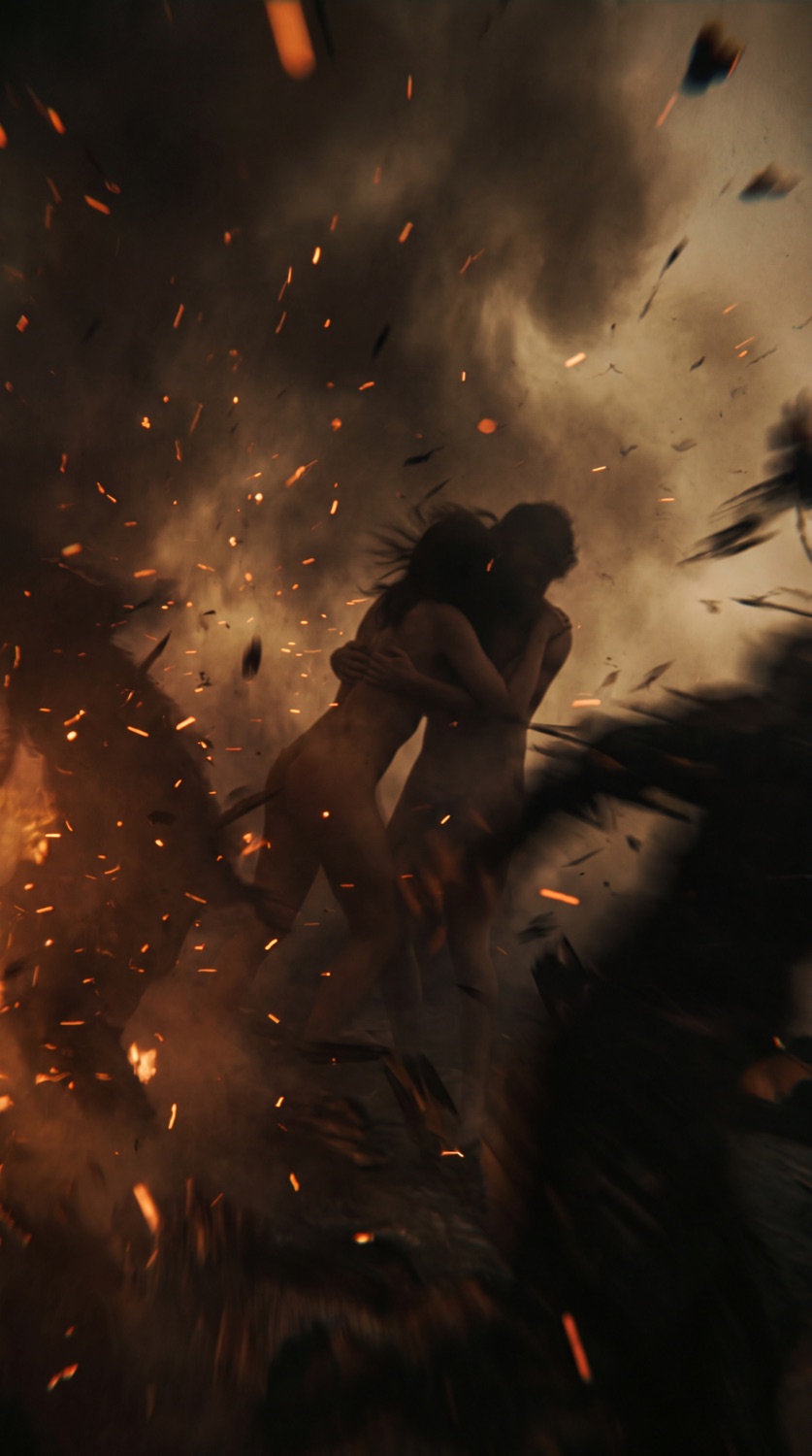
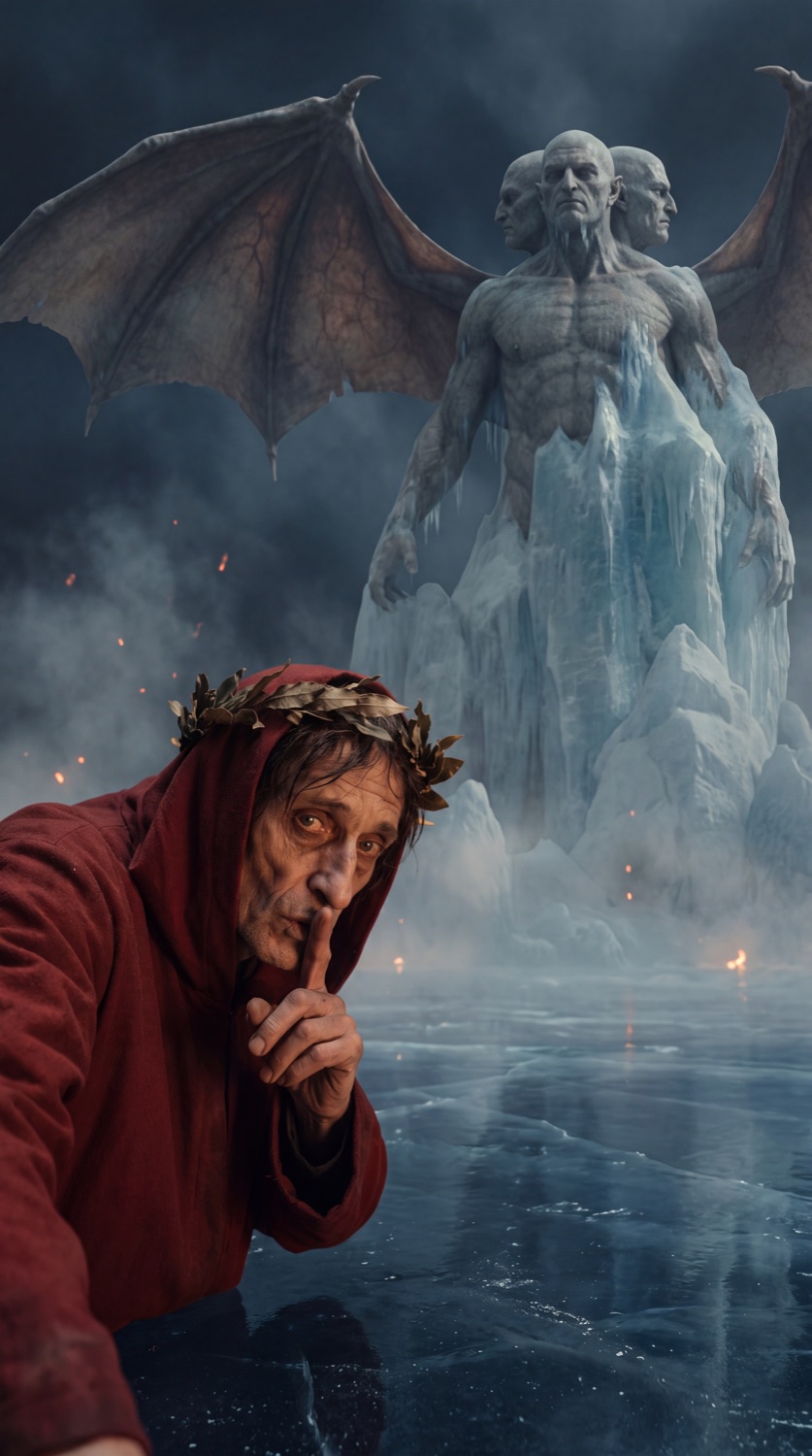
Purgatory, and the seven deadly sins
Climb out of the ice and you reach the shore of Mount Purgatory, a spiraling mountain with seven terraces, one for each of the seven deadly sins, from pride at the bottom to lust near the top. Souls climb it willingly, bent under the weight of what they carried in life, glad to be climbing at all. Every one of the poem’s three parts ends on the same word, stars. The first ends as the travelers come out of Hell, “and thence we came forth to see again the stars.” It is the most hopeful line ever written about the worst night of your life.
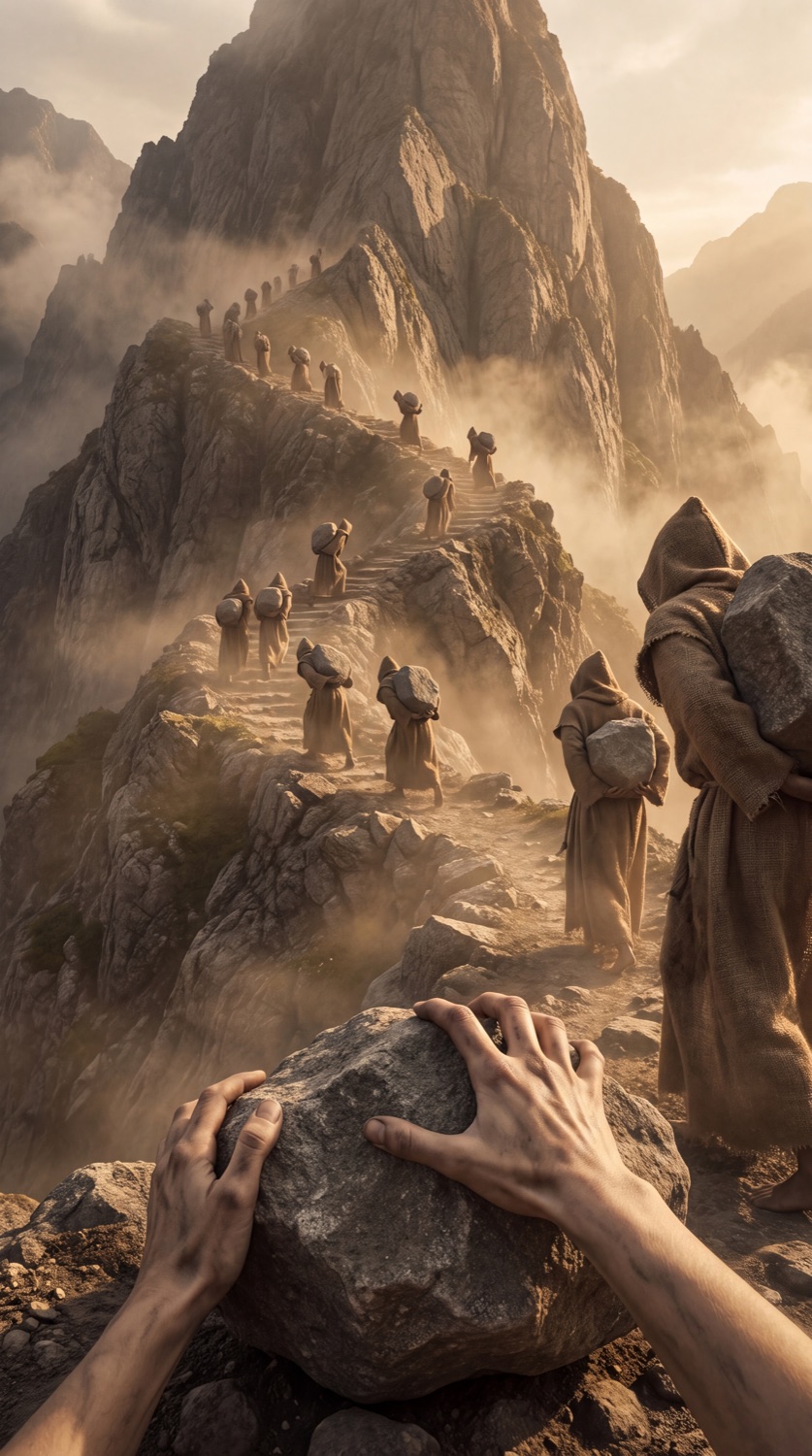
Who was Gustave Doré?
When you picture Dante’s Hell, you are very likely picturing Gustave Doré. He was the most famous illustrator of the nineteenth century, a self-taught prodigy from Strasbourg who drew directly onto woodblocks and let teams of engravers cut them, so that his imagination could reach everyone who could afford a book. When no publisher would gamble on a grand folio Dante, Doré paid to have the first plates engraved himself. The Inferno appeared in 1861 and made him famous across Europe. The Purgatorio and Paradiso followed in 1868, finishing one of the greatest illustrated books ever made. For millions of readers ever since, Doré’s Dante simply is Dante.
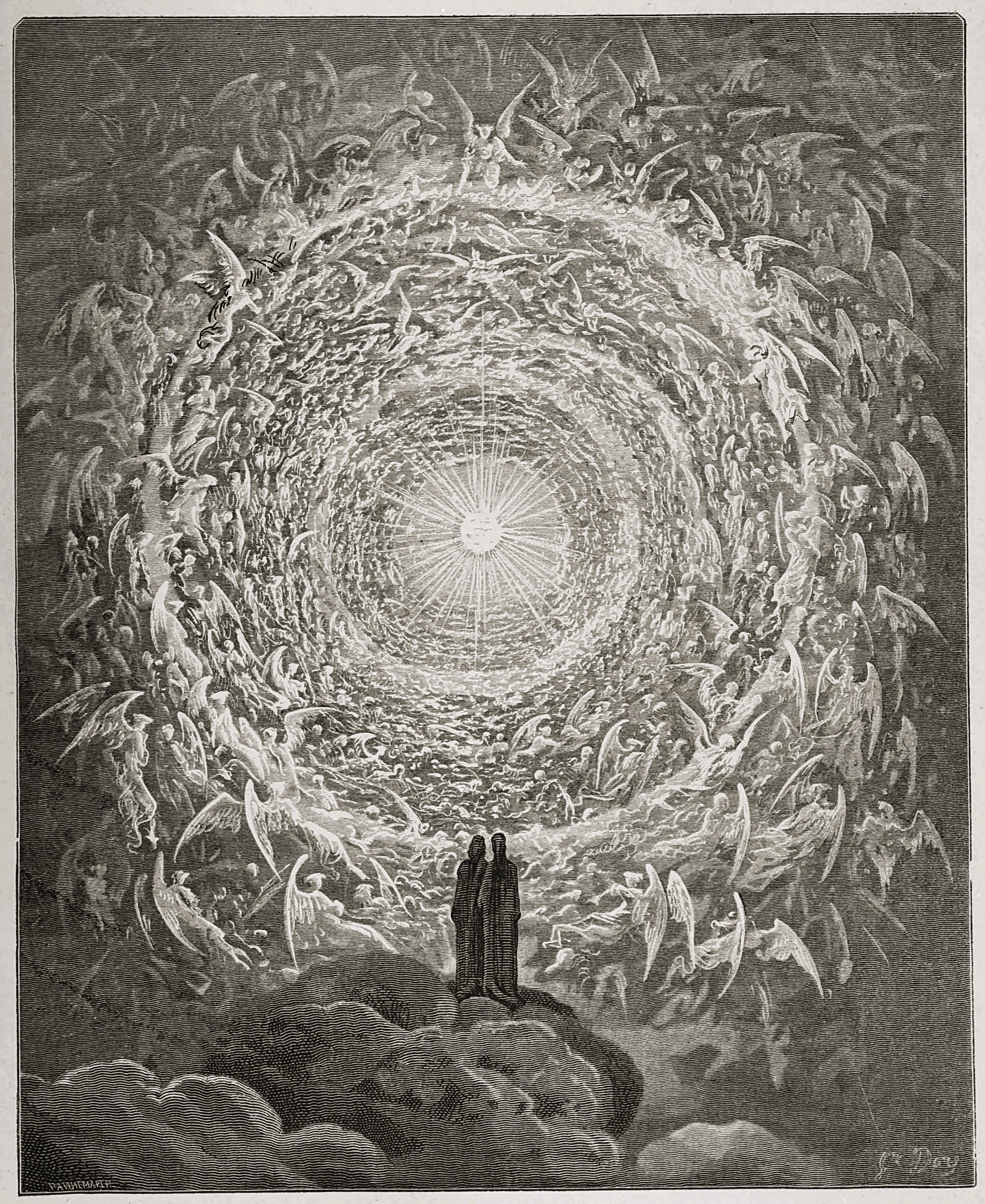
What is Dante’s Celestial Rose?
The video ends where the poem ends. In the final cantos of the Paradiso, Dante and Beatrice reach the Empyrean, the highest heaven, and see the souls of the blessed arranged as an immense white rose of light, with angels moving among them like bees. Doré drew the two small figures on a ledge of cloud before a vortex of circling radiance, thousands of winged figures dissolving into pure brightness. He had drawn every terror of the Inferno, and then, seven years later, he drew this. It is the moment the great engineer of nightmares turned all his machinery toward joy. We print it at the true size of the original plate, on archival Hahnemühle paper, in an honest open edition, because a masterpiece in the public domain belongs to everyone.
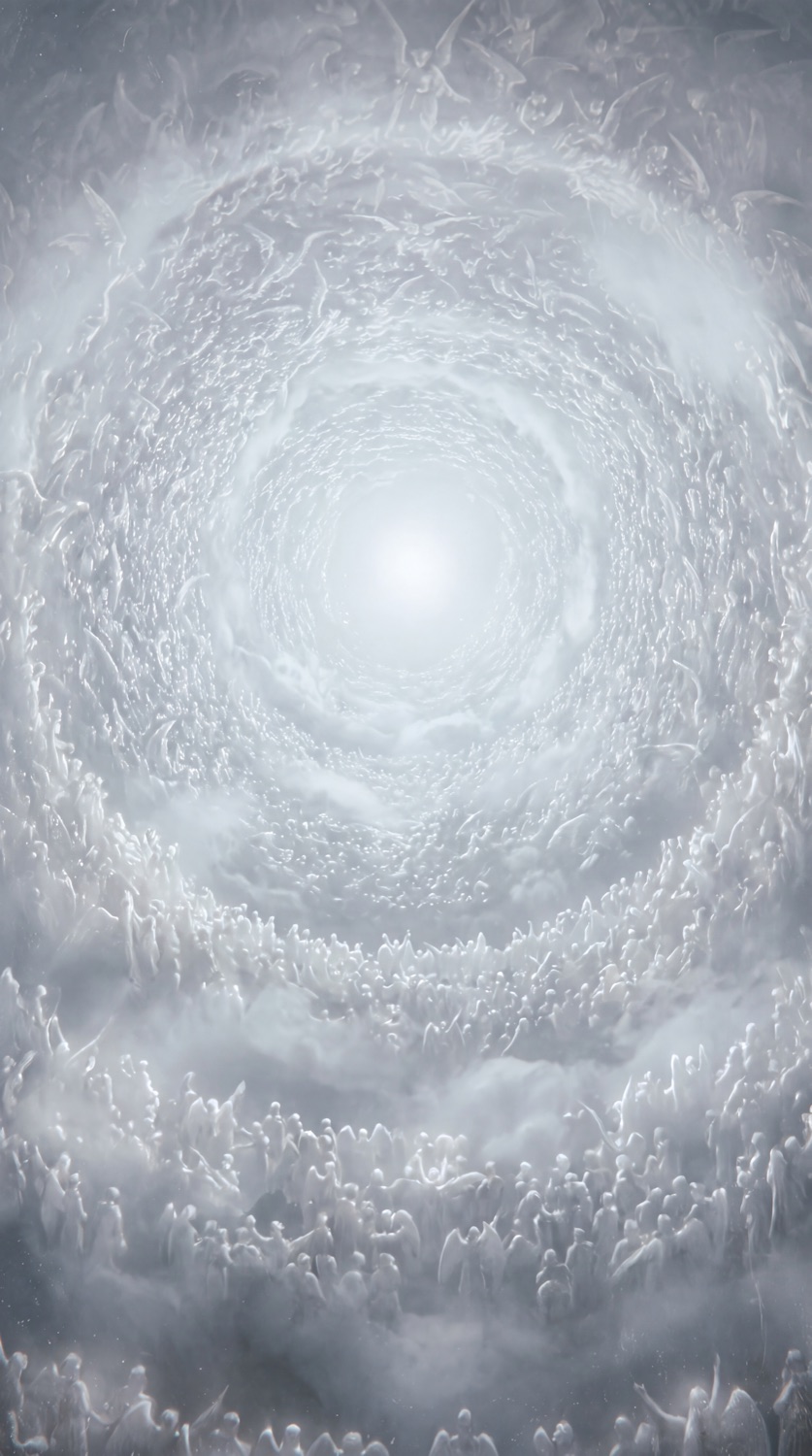
Dante ends the whole poem on a single line, and it is the line the video ends on too.
“The Love that moves the sun, and all the other stars.”
Why we made it in first person
In the poem, Dante is the traveler and Virgil is the guide who leads him up as far as the top of Purgatory, and then has to stop. We made one change. We put you in the traveler’s place, and let Dante himself be the guide, the one who has walked it before and knows the way out. At the top, on the edge of the light, he gives you the last words the guide gives in the poem, that your will is now free and upright and whole, and he crowns you master of yourself. And then he lets go.
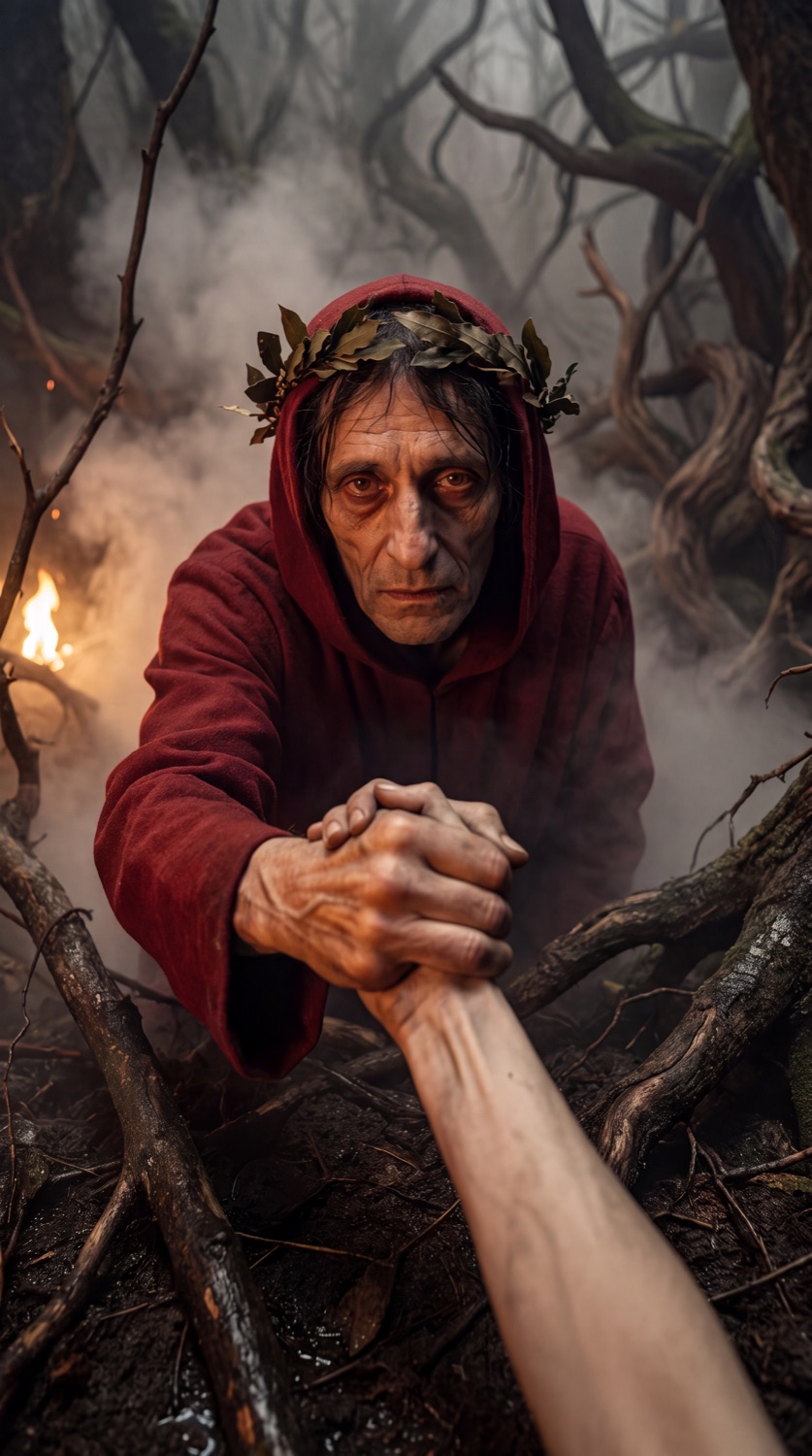
That is the quiet thing the Divine Comedy has always been about. The ones who pull you out of the dark rarely get to stand in the light with you. A parent, a teacher, the person who loved you before you knew how to love yourself. They walk you as far as they can, and then you have to let go of their hand and climb the last steps alone. Doré understood it too. His last and gentlest image is two small figures looking up, which is how every one of us stands before the things we love most.
Art has been doing this for seven hundred years, carrying us down through the dark and handing us back to the light. If you want to find the piece that does it for you, the style quiz takes two minutes.