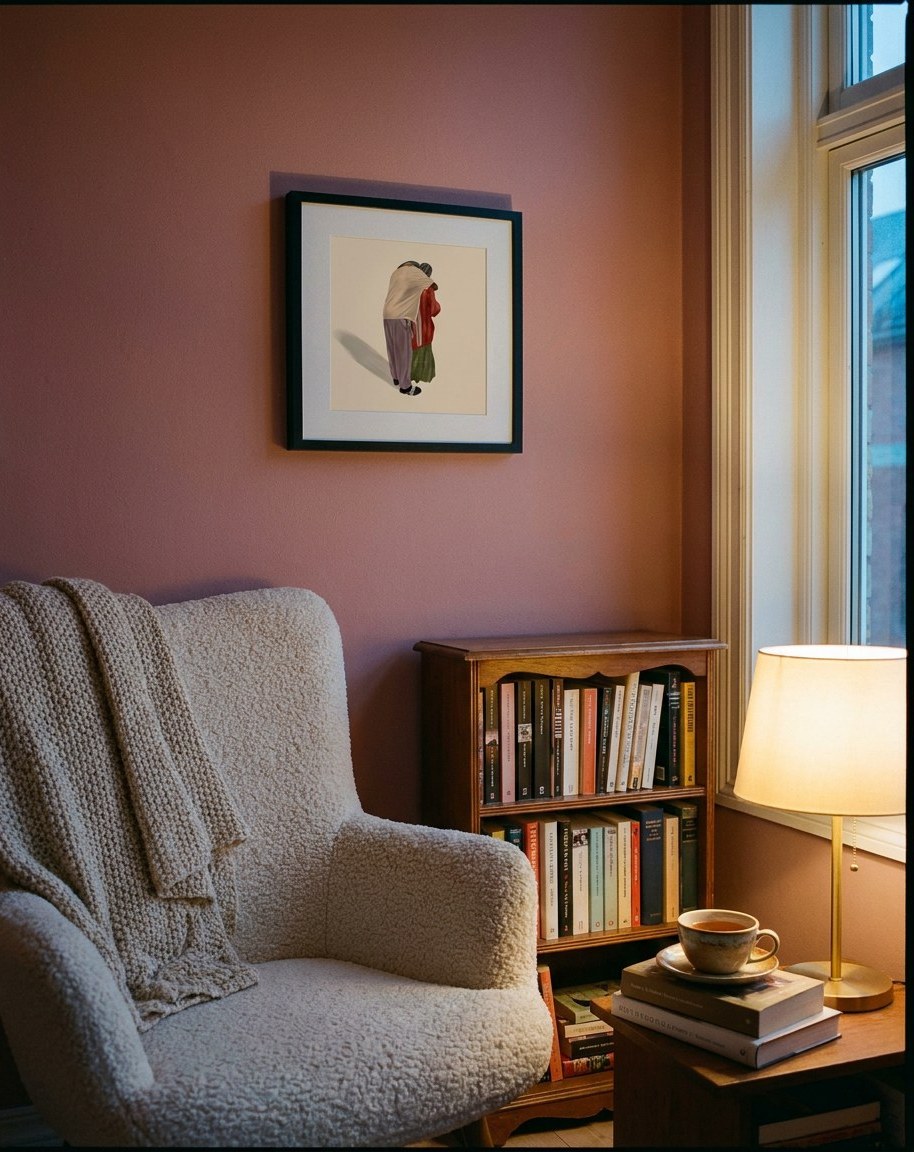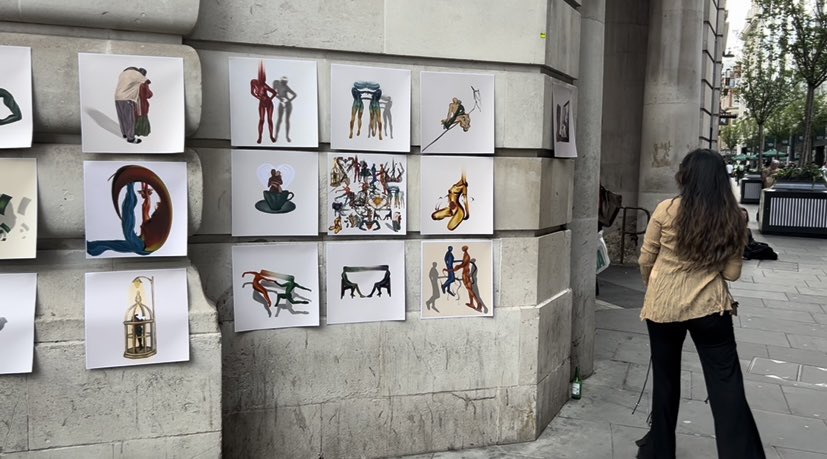
A limited edition print is a run of identical prints capped at a fixed number, made with the artist’s involvement and sold on a promise: once the edition is complete, no more will ever be made. Each one is numbered by hand, usually in pencil. That promise, not the paper or the ink, is what the word limited actually means.
Where the idea comes from
For most of printmaking’s history there was no cap at all. Tate’s glossary notes that before the late nineteenth century, prints were pulled in as many numbers as the process would allow, until the plate wore out. Declaring a limited edition is the modern convention: the artist or publisher restricts the run on purpose, and traditionally the printing surface is destroyed when the edition closes. A print is not a photocopy of a painting either. Museums treat prints as original works of art that happen to exist in multiples, which is why MoMA maintains a whole primer on what a print is.
What the fraction means
A print marked 12/50 is number 12 in an edition of 50. The right number is the size of the whole run, the left is the individual print in your hands, pencilled in the margin. One myth worth retiring: the left number is not the printing order. Artists sign and number in batches, so print 12 was not necessarily the twelfth off the press, and a lower number does not make a better print. That instinct is a leftover from the era of copper plates, which really did wear down as an edition ran. Modern editions are consistent from first to last, and Christie’s collecting guide treats the numbering as exactly what it is, a count.
What is an artist’s proof?
Alongside the numbered edition, a few impressions are pulled outside it. An artist’s proof, marked A.P., is the artist’s own copy, identical to the edition, by convention no more than about ten percent of the run. Printers keep a copy too, marked P.P. And somewhere there is the B.A.T., French for bon à tirer, good to print: the single approved proof every print in the edition is matched against. These conventions are centuries old, and they survive for a simple reason. They work.
Limited edition or open edition?
An open edition has no cap. It can be printed forever, is usually unsigned, and is usually cheaper. There is nothing wrong with an open edition, but you are buying different things. With a limited edition you share the image with a known number of other homes, the artist has signed off on your copy, and the run ends. With an open edition you are buying the image alone. Any shop worth your time will tell you which one is in front of you without being asked.
The promise is real. In some places it is the law.
The edition cap is not just etiquette. New York’s Arts and Cultural Affairs Law requires written disclosure of edition size, signature, and process for print multiples sold above one hundred dollars. California has required a certificate of authenticity stating the edition size since the 1970s, under its Fine Prints act, a law written partly in response to an era of print scams. Illinois and Minnesota have their own versions. When an artist numbers an edition, they are making a commitment with consumer law behind it, which is worth remembering the next time a poster site uses the word limited loosely.
What giclée means, and how long a print lasts
Giclée is fine art inkjet printing: pigment inks rather than dyes, archival papers, and resolution fine enough that no dot pattern is visible. The word was coined in the early 1990s by the printmaker Jack Duganne, from the French for nozzle, to separate what his studio was doing from the office inkjets of the day. The story is told in the Historic New Orleans Collection’s print-process archive. Done properly, it lasts: modern pigment ink sets have been rated by Wilhelm Imaging Research at up to two hundred years of display for colour prints, longer in dark storage, with the usual caveat that direct sunlight shortens everything. Our open editions are museum-grade giclée on enhanced matte fine art paper, and our Masters and limited editions print on Hahnemühle museum papers like Hahnemühle Photo Rag 308, a 308 gram, one hundred percent cotton, acid free paper that meets the ISO museum standard for age resistance. The full craft story lives on our prints and quality page.
So is a limited edition worth buying?
Here is the version print sellers tend to skip. A limited edition is no guarantee of future value, and anyone selling you one as a financial plan is doing you a disservice. We never will. What the edition guarantees is different: real materials chosen to outlive you, an artist who approved and signed the copy in your hands, a royalty that goes to that artist for every print in the run, and a promise, sometimes legally backed, that the image stops at fifty. Buy the print because you want to live with the image. The edition just means the artist meant it.
Every print on ArtMatch is a numbered edition from an artist we work with directly, from $39. If you do not know what you like yet, the style quiz is the place to find out.